
Chora: an urban landscape, not only a backdrop
Mykonos Town is a dense, working Cycladic settlement with its own logic of lanes, churches and trade routes. This section reads Chora in layers — where to walk, when to go, and what the whitewashed surfaces are actually built from.
Begin with the early-morning route if this is your first walk through town, then use the individual district and museum guides to go deeper.
Chora before breakfast: the town before it becomes a stage
Walk Mykonos Town early, beginning at the Old Harbor and moving through Kastro, Paraportiani, the back lanes of Little Venice and Kato Myli.
More about Chora before breakfast: the tow… →Kastro and Panagia Paraportiani: read Mykonos in layers
Kastro is the oldest part of Chora, formed around the former castle edge and harbor.
More about Kastro and Panagia Paraportiani… →The small museums of Mykonos explain what the street cannot
Mykonos Town’s museums connect the island to Rheneia and Delos, Aegean shipping, domestic life and agricultural work.
More about The small museums of Mykonos ex… →Little Venice with Context
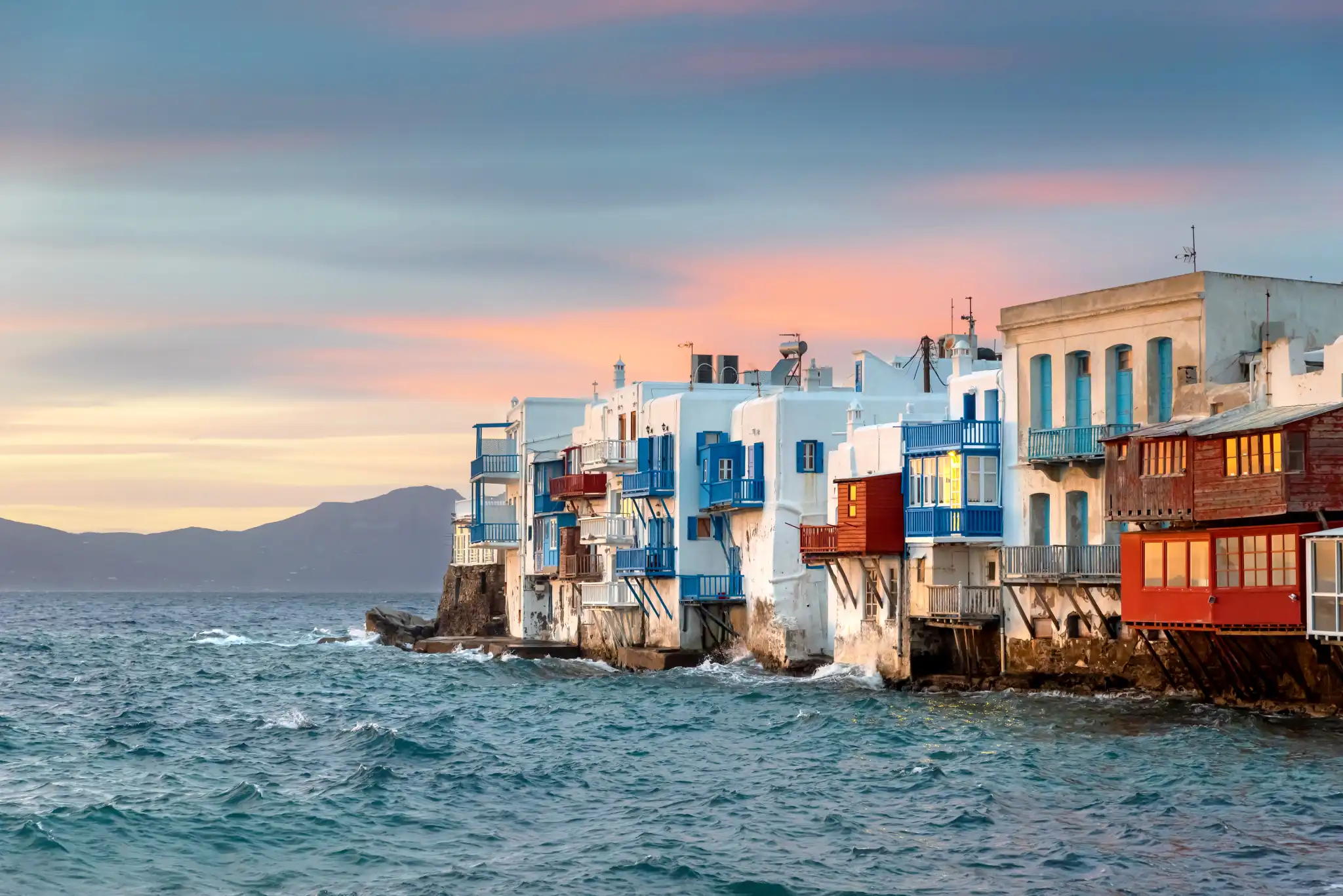
Little Venice is the row of tall houses along Chora’s western waterfront, their balconies built directly over the sea.
More about Little Venice with Context →Kato Myli and the Windmills
Mykonos’s windmills existed to grind grain, using the island’s near-constant wind as their power source — the postcard silhouette is a side effect of that function.
More about Kato Myli and the Windmills →Archaeological Museum of Mykonos
The museum holds material connected to the island’s ancient context, including finds linked to Rheneia.
More about Archaeological Museum of Mykonos →Aegean Maritime Museum
Founded in the 1980s, the Aegean Maritime Museum holds ship models, maps and maritime documents — and, in its garden, the original optical mechanism from the Armenistis lighthouse, tying a Chora visit directly to the island’s north coast.
More about Aegean Maritime Museum →Lena’s House and Domestic Mykonos
Where most of Chora’s architecture is read from the street, Lena’s House works the other way — a preserved domestic interior that explains rooms, furniture and daily life rather than facades.
More about Lena’s House and Domestic Mykonos →Folklore and Agricultural Museums
The Folklore Museum and the Agricultural Museum at Boni’s windmill aren’t interchangeable — one covers domestic and maritime objects, the other food production.
More about Folklore and Agricultural Museums →Manto Mavrogenous and Revolutionary Mykonos
Manto Mavrogenous is commemorated across Mykonos with a statue and a central square, but her actual role in the Greek Revolution — political, financial and organizational — is often reduced to a passing mention.
More about Manto Mavrogenous and Revolutio… →Cine Manto and a Quieter Evening
Tucked into the Meletopoulos garden, Cine Manto is a municipal open-air cinema, established according to municipal sources in 1995 — a genuinely used cultural venue, not simply a picturesque hidden garden.
More about Cine Manto and a Quieter Evening →